Conviction Review Today: A Guide for Prosecutors

Author: PCE

Author: PCE

Authors: Arc, NAMI, PCE
Individuals with intellectual and developmental disabilities (I/DD) or mental illness are overrepresented in the criminal justice system, as victims, witnesses, suspects, and defendants. In an effort to inform prosecutors’ strategies when working with these individuals, PCE, in collaboration with the Arc and NAMI, has developed this guide.
The guide includes the following information:

Authors: PCE, NRTAC
This paper, developed by PCE’s Executive Director Kristine Hamann and St. Louis Circuit Attorney’s Office Chief of Trials Rachel Smith, addresses the critical question of how best to maximize the resources of a public forensic laboratory.

Author(s): Kristine Hamann and Rachel Smith
This paper addresses facial recognition technology used by law enforcement to enhance surveillance capabilities and the associated legal issues it raises.
Author(s): Kristine Hamann
As police departments across the United States embrace the use of police body-worn cameras, the cameras will inevitably capture a great deal of evidentiary material that will be useful in every type of criminal prosecution.

Author(s): Kristine Hamann and John Delaney
Fifteen seasoned violent-crime prosecutors shared their ideas about how to improve the investigation of violent crimes at a meeting sponsored by BJA and DOJ. This paper shares an overview of the meeting discussion and the approaches and challenges faced by the jurisdictions at the meeting.
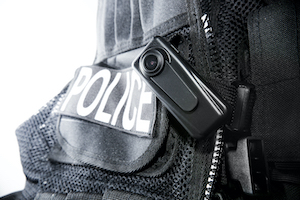
Author(s): Kristine Hamann, PCE
It is imperative that prosecutors be involved in the BWC uptake process as early as possible. The cameras will inevitably capture a great deal of evidentiary material that will be used in every type of criminal prosecution.
.

Author(s): Kristine Hamann, PCE
The development of an electronic discovery system will significantly benefit a prosecutor’s office by providing accurate records, a speedier process and appropriate accountability for all parties.

Author(s): Kristine Hamann, Rebecca Rader Brown
In May 2013, a Colorado man fails to show up to work. Concerned, the man’s boss visits his house, where the man’s roommate refuses to let the boss enter. The boss contacts the police, who launch a missing person investigation. Using cell tower technology, police are able to approximate the missing man’s location in the hours leading up to his disappearance.
Read More
This eyewitness identification toolkit provides prosecutors with an overview of the research behind witness memory and offers guidance for developing identification procedures. Prosecutors should take the lead in making sure that the identification procedures used in their state yield reliable, admissible evidence. The first step is to learn what procedures their police departments are using and to determine if they are fair and reliable.